

How Habits Are Built, Broken, and Rewired
Before you change your body…
Before you change your behavior…
You have to see what’s been running the show.In the previous two articles, we explored Wanting (article 1, article 2)
These unconscious attachments (to control, approval, comfort, etc.) create resistance, sabotage your habits, and block your peace.But once you see them, awareness alone isn’t enough.
You still have to walk a new path.
You still have to face the pull of the old groove.That’s where this begins.
Picture your habits like trails in a field.
The more you walk them, the deeper they get — until eventually, you’re not even thinking anymore. You’re just following the groove.
That’s how habits work: repetition becomes identity.
Neuroscience backs this up.
Every time you repeat a behavior, your brain strengthens the neural pathway behind it. Over time, those neural paths get reinforced and, in many cases, coated with myelin (especially in repetitive, practiced behaviors) making the signal faster and the action more automatic.
Like paving a shortcut through the field — your brain turns a choice into a reflex.
The result?
Efficiency. Automaticity. Identity.
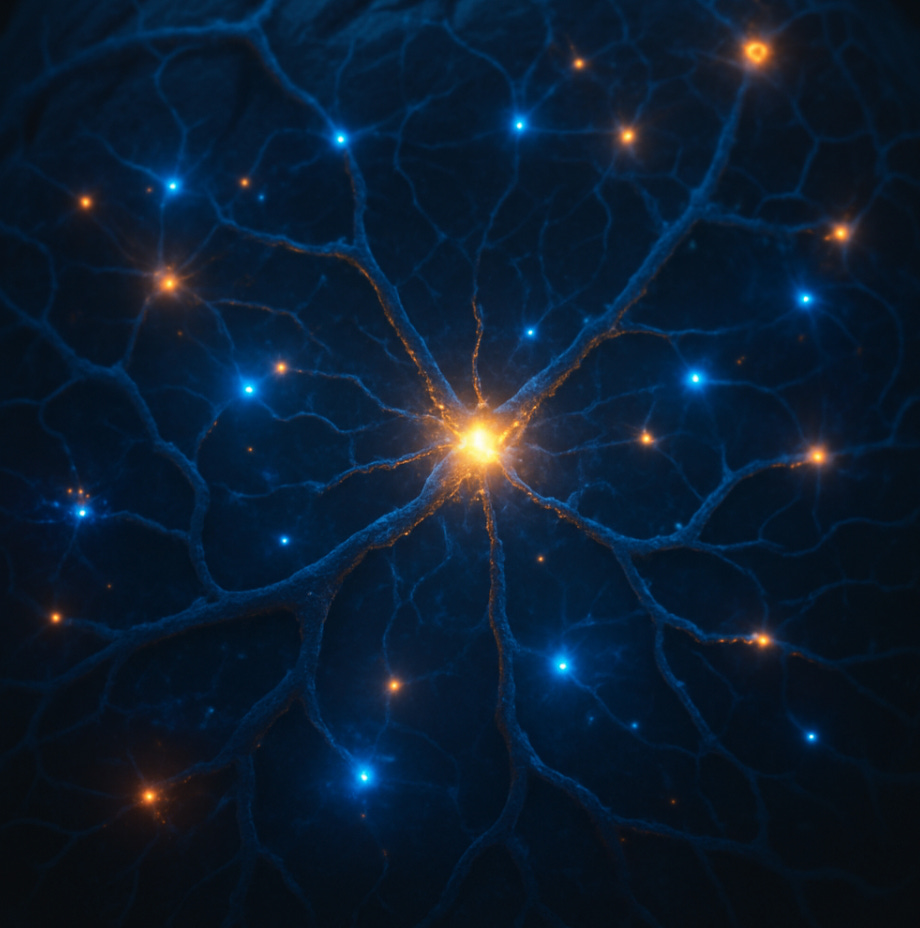
The Old Groove vs. The New Trail
Your current habit (whether it’s evening wine, stress-snacking, phone scrolling, skipping workouts) has been reinforced through repetition, emotion, and relief.
It’s efficient. Familiar. Automatic.
That’s why it feels easier.
Because it is easier — at first.
When you try to change, you’re not just resisting behavior.
You’re bushwhacking a new path while the old one is wide open.
You Have a Choice, But It Won’t Feel Like It
In the beginning, the first 21 days, the old groove still owns the momentum.
Your brain is wired for the shortcut.
The prefrontal cortex, your conscious decision-maker, is doing the heavy lifting.
But it fatigues easily. And when it does?
You default to your basal ganglia — the brain’s autopilot.
You’ll bargain.
You’ll justify.
You’ll say, “Just this once.”
You’ll say, “I deserve it.”You might even say, “Just one won’t hurt,” while holding a glass of wine like it’s a peace treaty with your past self.
It’s friction.
And friction means you’re doing the work of change.
Breaking the Spell
But here’s something deeper most people miss:
Real change doesn’t start with effort.
It starts when the spell breaks.
That moment of clarity — when you see the pattern, feel the charge, and finally admit the truth — that’s what cracks open the seed.
You’re not just noticing a habit.
You’re exposing the programming behind it.
You’re piercing the fog.
You’re not scrubbing the surface of your soul.
You’re opening space for the truth to be seen — sometimes for the first time.
That’s not just psychology.
That’s presence.
That’s grace.
It’s your nervous system softening just enough to let the truth land.
It’s survival stepping aside.
It’s the cage door swinging open.
The pattern isn’t erased — but it’s decharged and disarmed.
The illusion loses its grip.
Now it’s just a groove.
And a groove can be left behind.
You can still fall back — but not into the same cage.
Because now you know the door opens.
And even if you forget, something in you remembers.
That’s the gift of even a glimpse of real grace.
Grace cracks open the seed.
Practice lays the new groove.
Identity shifts from compulsion to conscious authorship.

The Willingness Split: Head vs. Heart
Most people say they’re “willing to change.”
But here’s the truth:
Willing to change is mental. It’s head-based. It’s wanting.
Willing for change is heart-based. It’s courageous. It’s action.
The head says:
“I want to stop drinking.”
“I want to eat better.”
“I want to be less reactive.”
The heart says:
“I’m willing to feel discomfort. I’m willing to face fear. I’m willing for the transformation.”
You can’t access the heart when you’re trapped in the cage of the head.
And you can’t access real change until you move from desire to decision.
The Freedom Formula
This is how the new path becomes real:
21 Days – You walk the new trail. It’s still awkward. Still tempting to turn back. But you’re starting to feel agency. You’re building awareness and momentum.
45–60 Days – The new path feels smoother. The old one begins to grow over. Cravings lose their grip. You’re not white-knuckling anymore — you’re choosing.
90+ Days – Identity begins to shift. You’re not trying to be different. You are different. The new groove has become your baseline. The old path no longer calls the shots.
But let me be clear — this isn’t just about time.
It’s about getting in reps.
These timeframes vary based on context, behavior, and intensity. Research shows habit formation can take 18-254 days, with an average around 66 days (Lally et al., 2009).
In motor learning and habit coaching circles, it’s often said that it takes 300 to 500 reps to install a new groove, and far more to override a deeply ingrained one.
Which means you can hit 90 days and never change… if you don’t show up.
And you can change your brain in 30… if you do the reps that rewire.
You need time to get the reps in.
But it’s the intensity of consistency that rewires your brain, not the number of days on a calendar.
This is neuroplasticity in motion — your daily choices are literally reshaping the structure and firing of your brain.
Identity isn’t just philosophical.
It’s biological.
And One More Truth About Change…
Every client I’ve worked with who’s had a real breakthrough (who finally broke the cycle, dropped the weight, built the discipline, found peace) had one thing in common:
They had a moment.
A real one.
The moment they saw it — and admitted it.
The moment they realized: “I’ve been fooling myself.”
It wasn’t shame.
It wasn’t guilt.
It was clarity.
It was honesty.
It was the spell breaking.
Because once you’ve seen clearly, you can’t go back blindly.
That’s the moment the game changed — not just their behavior, but their trajectory.

Who You Think You Are Isn’t Who You Are
The hardest part of change isn’t behavior.
It’s identity.
Your old habits were built by a version of you that believed:
“I can’t handle stress without food or alcohol.”
That’s not you.
That’s a set of protective patterns that once helped you survive.
But who you really are is the awareness that sees those parts — and still chooses to lead.
You’re not just changing what you do.
You’re changing who you believe yourself to be.
And that’s where real power lives.
What Makes It Easier
🔹 Don’t argue with the voice.
When the urge hits, don’t debate it. Just name it:
“This is the part of me that wants relief.”
Label it. Don’t live in it.
🔹 Shift your body before your mind.
Move first — think later.
Do 20 pushups. Take a cold shower. Go for a walk. Dance. Tap. Laugh.
State change beats willpower.
🔹 Delay by 15 minutes.
Tell yourself:
“I can give in — but only after 15 minutes of walking, breathing, or journaling.”
Cravings usually collapse before the timer does.
This exploits the dopamine gap — the time between urge and reward — and gives your prefrontal cortex a fighting chance.
🔹 Choose a replacement ritual now — not in the moment.
Don’t wait until the craving hits. Have something ready:
Herbal tea
5-minute breathwork
Journaling the truth
Candle, quiet, sit
Ritual replaces ritual.
🔹 Decide earlier in the day.
After 9 p.m., your brain turns into a used car salesman.
It’ll offer you anything — just don’t say no to the cookie.
Make your decisions in the morning (when your prefrontal cortex is fresh) and honor the plan, not the feeling.
🔹 Ask your future self.
“What would tomorrow’s version of me thank me for?”
This isn’t just about tonight.
It’s about who you’re becoming.
This Isn’t About Control — It’s About Clarity
You don’t need to prove discipline.
You need to prove to yourself that you’re awake.
You don’t need to be perfect.
You need to be present.
Hold the line for 21.
Free yourself by 90.
Rebuild your identity by walking it out — day by day, rep by rep.
Let the old groove fade.
Let the new one rise.And walk the path like you mean it.